
A new trend has swept through the younger generation’s self-care vocabulary, and experts are torn on whether it’s a good thing or not. Bed rotting is the act of consciously choosing to stay in bed for leisure, not for sleeping.
What is Bed Rotting?
What you do in bed during a bed rot is up to you; many people watch TV, scroll social media, read books, engage in hobbies, or even call friends. What happens in a bed rot isn’t the point; it’s the location and the mindset.
Bed rotting started as a self-care exercise and a push back to the expectation of constant productivity. Experts agree that in low doses, bed rotting can help people relax and unwind.
Current work culture stresses near constant productivity. Social media mirrors this, with a plethora of health influencers taking to the apps to document their 4 a.m. morning routine and their filled-to-the-brim weekend plans. Side hustles have become the new normal, and downtime is quickly shrinking. In 2024, the average worker spent around 5 hours in leisure time a day (average includes weekends). This is down from around 6 hours of leisure time a day in 2014 (average includes weekends).
Bed rotting emerged as a way to fight the push of productivity. The bed isn’t the place to be productive, and so it is easier for many to unwind and feel at peace rather than stressed out. When they’re bedrotting, they don’t have that nagging sense that they should be doing something more productive.
Does this make bed rotting a healthy endeavor? Not quite. Although an understandable pursuit, bed rotting is still linked to mental health issues, especially when it is used in excess.
How many hours in bed is considered bed rotting?
There isn’t a set amount of hours that determines bed rotting. Instead, it is a state of mind. Thirty minutes could be bed rotting. So could 8 hours. Instead of measuring your time in bed by time, look for these other symptoms of bed rotting:
- Staying in bed for most of the day despite not sleeping.
- Skipping meals or eating in bed instead of at a table.
- Neglecting personal hygiene (e.g., skipping showers or brushing teeth).
- Declining invitations or avoiding social interactions.
- Loss of motivation to complete daily tasks or responsibilities.
- Using screens excessively in bed (phone, TV, laptop) as a distraction.
- Feeling physically sluggish or fatigued despite resting.
- Experiencing feelings of guilt, shame, or frustration about inactivity.
- Difficulty starting the day or getting out of bed even when obligations exist.
- Emotional numbness, sadness, or irritability.
- Disrupted sleep schedule (oversleeping during the day, insomnia at night).
Bet rotting is a prolonged time spent lying in bed beyond what’s needed for rest. It can be tied to stress, burnout, depression, and other mental health struggles.
Are there benefits to bed rotting?
Yes, in moderation, bed rotting can be beneficial. Some of the benefits of bed rotting include:
- Mental recharge – stepping away from responsibilities can help reduce stress.
- Physical rest – allows muscles and joints to recover from activity or strain.
- Improved mood – taking time for comfort can provide emotional relief.
- Opportunity for reflection – uninterrupted time to think or process emotions.
- Sensory comfort – cozy blankets, soft pillows, and a safe environment can promote relaxation.
- Reduced overstimulation – less exposure to noise, crowds, and constant demands.
- Creative reset – unstructured downtime can help spark new ideas.
It’s important to note that these benefits occur when bed rotting is done intentionally and in moderation. Follow these steps to keep bed rotting a healthy self-care strategy, and not a trigger for mental health issues:
- Keep your phone out of bed. Don’t scroll! Doom scrolling plus bed rotting is a bad combo. To help fight the urge to pull up the easiest social media app, keep your phone out of bed. Focus on restoring your energy and strength by focusing on yourself.
- Eat healthy. Everything in moderation, even junk food. You can bring in your favorite sweet treat or comfort food, but don’t forget to eat some protein, fruits, and veggies. Also, keep full water bottle by your bed.
- Schedule something social afterwards: Studies show that our social time, the time we spend with friends and family, has been declining over the years. This is concerning because a strong support system is key to good mental health. So, after you bed rot for a bit, call a friend or invite someone over.
- Engage in your hobbies: Be creative, pursue a new interest, or learn something new. What are those indulgent hobbies you rarely give yourself time for because they are “useless” or “not productive”? Do things like creating art, learning a new language, or researching your special interest. Bed rotting is the perfect time to engage in those “useless” pursuits. (Which are actually great for your mental health!)
When done right, bed rotting can absolutely be beneficial and a healthy part of your self-care plan.
Is bed rotting a sign of mental illness?
Sometimes, bed rotting can be a sign of mental illness. If your bed rotting looks like this, you might have an underlying mental health condition:
- You bed rot for long hours, multiple days on end.
- You scroll or dissociate in bed for long periods of time.
- You bed rot because you don’t feel like you have the energy or willpower to get out of bed.
- You neglect other parts of your health because you’re bed rotting.
- You feel worse after bed rotting than you did before.
- Bedrotting doesn’t give you any energy or sense of calm. It just makes you feel frustrated, guilty, or gross.
If your bedrotting experience looks like that, then you might have a mental health disorder. Disorders linked to bed rotting include:
- Burnout
- Depression
- Chronic Stress
- Obsessive Compulsive Disorder
And more. This is not a complete list. If you think you might be struggling with your mental health, talk to a therapist near you. They can help get you the treatment you need.
How to Stop Bed Rotting
You’ve examined your bed rotting habits and determined that it’s not just self-care for you; it’s harmful to your mental, physical, and relational health. You want to stop, but you don’t feel like you can. Bed rotting has become an important maladaptive coping mechanism, and you’re unsure what to replace it with. Or maybe you feel like you can’t get out of bed, no matter how much you want to.
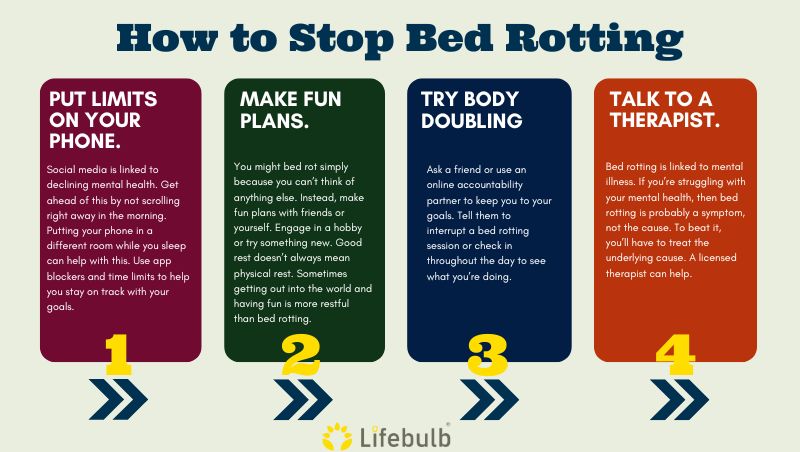
There are ways to stop bed rotting. Here are some tips:
- Put limits on your phone. Bed rotting is linked to increased social media use, which is linked to all kinds of mental health disorders. Get ahead of this by not scrolling right away in the morning. Putting your phone in a different room while you sleep can help with this. Use app blockers and time limits to help you stay on track with your goals.
- Make fun plans: It can be hard to know what to do with yourself when you have free time. As a result, you might bed rot simply because you can’t think of anything else. Instead, make fun plans with friends or yourself. Engage in a hobby or try something new. Good rest doesn’t always mean physical rest. Sometimes getting out into the world and having fun is more restful than bed rotting.
- Get an accountability partner: Ask a friend or use an online accountability partner to keep you to your goals. Tell them to interrupt a bed rotting session or check in throughout the day to see what you’re doing.
- Talk to a therapist. Bed rotting is linked to mental illness. If you’re struggling with your mental health, then bed rotting is probably a symptom, not the cause. To beat it, you’ll have to treat the underlying cause. A licensed therapist can help.
If you’re ready to beat bed rotting and get to the root of your struggles, Lifebulb Counseling and Therapy can help. We have virtual therapists with availability near you. We accept most major insurance and have no wait times. Contact our team or browse our therapists to get started today.
-(1).webp)

.webp)
-(1).webp)