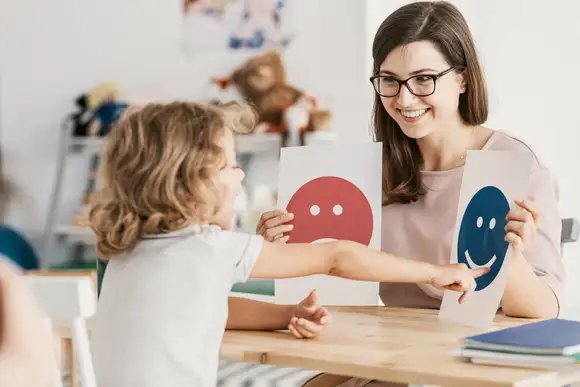
Cognitive Behavioral Therapy (CBT) is a therapy method popular for its effectiveness at treating many different mental health disorders. From ADHD to trauma, elements of CBT are found in treatment plans everywhere. Cognitive behavioral therapy is even for kids.
During CBT, a therapist will help their client identify negative, untrue thinking patterns called cognitive distortions. These are those powerful thoughts, such as “I’m unloveable,” or “I had that cookie after lunch, so I’ll just restart my diet on Monday,” or “They didn’t text me back, so they must be cheating on me!” These thought patterns are usually untrue, negative, and deeply harmful to you and your relationships. CBT helps get to the root of these thought patterns and replace them with positive, true ones.
CBT for kids is a way to help children learn healthy behavioral and thinking patterns and grow in self-awareness. Although some techniques are altered to be better suited for a younger mind, the core tenets of CBT are very helpful to a child.
Can CBT Be Used for Kids?
Yes! CBT is very effective at treating mental health issues in kids and helping their overall growth and wellness. A child does not have to be diagnosed with a mental health disorder in order to receive treatment.
Cognitive Behavioral Therapy (CBT) for kids can help address a variety of mental health concerns and challenges, including:
- Managing Anxiety: CBT can provide strategies to help children cope with anxiety-provoking situations and learn how to challenge and reframe anxious thoughts.
- Building Coping Skills: CBT helps kids develop healthy coping mechanisms to deal with stress, fears, and difficult emotions, enhancing their emotional resilience.
- Addressing Behavioral Issues: CBT can assist in identifying and modifying negative behaviors by teaching children how to recognize triggers and develop positive responses.
- Improving Emotional Regulation: Through CBT, children can learn techniques to regulate their emotions effectively and respond adaptively to challenging situations.
- Enhancing Self-Esteem: CBT can aid in boosting self-confidence and improving self-esteem by challenging negative self-perceptions and promoting positive self-talk.
- Developing Problem-Solving Skills: CBT can teach children problem-solving strategies to navigate various difficulties and make effective decisions.
By incorporating CBT techniques tailored to children's needs, therapists can empower young individuals to develop essential life skills, improve their mental well-being, and foster a positive outlook on life.
How Does Children’s Cognitive Behavioral Therapy Work?
Depending on their age, a child may not have the emotional or language capacity to have the in-depth conversation and self-reflection normally present in adult talk therapy. Instead, researchers have found techniques that therapists can use in cognitive behavioral therapy for kids that are effective at meeting them where they are at.
These techniques include:
Play Therapy: Play therapy provides a safe and engaging environment for children to explore and communicate difficult emotions, experiences, and conflicts. Therapists use play therapy techniques to help children process and resolve underlying issues, improve emotional regulation, enhance self-expression, and develop coping skills.
Trauma-Focused CBT: Trauma-Focused Cognitive Behavioral Therapy (TF-CBT) is a specialized form of CBT designed to help children and adolescents who have experienced traumatic events. TF-CBT incorporates cognitive-behavioral techniques to address the emotional, cognitive, and behavioral impacts of trauma.
Exposure Therapy: Exposure Therapy is a technique used in CBT for kids to help them confront and gradually overcome fears and anxiety triggers in a safe and controlled manner. Children are exposed to fear-inducing stimuli or situations in a systematic and gradual way to reduce their emotional reactivity and anxiety responses. Exposure therapy helps kids confront their fears, challenge negative beliefs, develop effective coping strategies, and ultimately decrease their fear and anxiety levels over time.
Within a cognitive behavioral session for kids, a therapist will use skills such as:
- Modelling: Demonstrating the behavior they want the child to pick up. For example, if a child who struggles with angry outbursts is playing with blocks and the tower crumbles, a therapist might say “Oh man, what a bummer!” and then take a deep breath. The child sees this and will start to model the same behavior, opting for the emotional regulating behavior of a deep breath rather than the unregulated behavior of throwing something.
- Restructuring: A good technique for older children who are able to identify their thoughts, restructuring involves flipping a negative thought on its head and replacing it with a positive thought. For example, if a child says, “I’m so bad at math, I’m never going to get it.” Restructuring will encourage them to say instead, “Math can be challenging for me, but I have skills in other areas, and I can get this if I keep practicing.”
- Relaxation techniques: Children need help regulating their emotions, and relaxation techniques can help with that. This might mean deep breathing, moving their body in a safe way, or doing a color scanning exercise.
- Behavioral Modification: Sometimes children exhibit behaviors that are disruptive or unsafe. There is usually a reason behind this, like fear, stress, or excitement. Behavioral modification helps a child turn an unsafe behavior into a safe one while still providing them with the emotional outlet they need. For example, if a young child has a habit of throwing things when they are angry, modifying that behavior to stomping their foot or taking a deep breath makes the behavior safe while still giving them the outlet they need to vent their emotions.
The goal of Cognitive Behavioral Therapy for children is not to make them stop being kids. Instead, CBT for kids will meet the child where they’re at. A 6-year-old isn’t supposed to have perfect emotional regulation, and the goal of CBT is not to stop them from feeling their feelings. Instead, they will help the child feel their emotions in a safe way.
What Can Cognitive Behavioral Therapy for Kids Help With?
Cognitive behavioral therapy for children can help kids with a diagnosed condition and those without one. It is effective at treating disorders such as:
- Anxiety disorders: CBT has been found to be an effective first-line treatment for children with anxiety disorders. It can assist in managing symptoms of generalized anxiety, social anxiety, and specific phobias, among other anxiety-related concerns.
- Obsessive-Compulsive Disorder (OCD): CBT, particularly with a focus on exposure and response prevention, is an effective psychosocial treatment for children with OCD, as evidenced by large effect sizes from meta-analyses.
- Trauma-related disorders: Trauma-Focused CBT (TF-CBT) is a specialized form of CBT designed to help children and adolescents who have experienced traumatic events. It has been found to be effective in addressing symptoms related to trauma.
- Depression: CBT has been shown to be beneficial for children and adolescents with depression, helping them challenge negative thought patterns and develop effective coping strategies.
- Behavioral issues: CBT can aid in identifying and modifying negative behaviors by teaching children how to recognize triggers and develop positive responses.
- Eating disorders: CBT can be used as part of a comprehensive treatment approach for children and adolescents with eating disorders, addressing distorted beliefs about body image and food, and fostering healthier coping mechanisms.
CBT is also a good option if your child is struggling with a difficult transition like the loss of a family member, a big move, or changing grades. Your child doesn’t have to have a diagnosis to struggle, and if they are struggling, therapy can help.
-min.webp)
-min.webp)