.webp)
Around 9% of the U.S population will have an eating disorder at some point in their lives. The chances that you know someone who is struggling with an eating disorder are fairly high.
Eating disorders can affect anyone, but they’re most common in younger women and teenagers. They’re also more common among athletes or people who have a co-existing mental health disorder.
It is estimated that around one-third to three-quarters of people with an eating disorder will make a full recovery. It has a lower recovery rate from other mental health issues, not because recovery isn’t effective, but because so many people with an eating disorder don’t seek treatment.
The core fear behind an eating disorder, gaining weight or being “fat”, keeps people from seeking treatment. They believe that if they are treated, they’ll gain weight.
This is why a strong support system is one of the most important factors for eating disorder recovery. Having friends, family, mentors, and a community around them will help people recover from eating disorders.
If you have a loved one with an eating disorder, you probably want to help. This article will give you some tips on how to do so.
Types of Eating Disorders
There are three main types of eating disorders. These are:
- Anorexia Nervosa: Intense fear of gaining weight, a distorted body image, and severe restriction of food intake. It often leads to significant weight loss and serious physical and emotional health consequences. It is the most deadly of the three eating disorders, and getting proper treatment is crucial.
- Bulimia Nervosa: Recurring episodes of binge eating large amounts of food, in which they might feel unable to control their eating. This is followed by purging behaviors such as vomiting, laxative use, fasting, or excessive exercise to try to “cancel out” the calories consumed. Individuals may maintain a “normal” weight but experience significant emotional distress and health risks.
- Binge-Eating Disorder (BED): Frequent episodes of eating large amounts of food in a short time while feeling a loss of control, without regular purging behaviors. It is often associated with shame, guilt, and increased risk of medical and mental health concerns.
Each eating disorder is treated differently, but how you can support someone through them is much the same.
Signs Someone Has an Eating Disorder
People with eating disorders often try to hide their behavior. They have an understanding that what they're doing is unhealthy, but they feel unable to stop.
If someone comes to you and tells you they are struggling with their eating, body image, or thinks they have an eating disorder, listen to them. Take them seriously. It probably took a lot of courage to open up.
If they don’t come to you, you might have to broach the subject on your own. Look for these signs that someone has an eating disorder:
Signs They Have Binge Eating Disorder
- They are above average weight
- They binge eat large quantities of food, often in secret
- They have a lot of shame and guilt around binge eating.
- They try to keep the binge eating a secret.
- They feel out of control when they binge eat, like they can’t stop it.
- They make negative remarks about their body, weight, or eating habits.
Signs They Have Bulimia
- They binge eat large quantities of food
- They engage in purging behaviors like self-induced vomiting, use of laxatives, over-exercising, or fasting
- They try to keep their binge eating and purging a secret
- They’re always trying a new dieting trend.
- They talk negatively about their weight or how they look
- They track calories
- They might have swelling in their cheeks or knuckles
- Their teeth might be yellowing
Signs They Have Anorexia
- Extreme weight loss
- Makes excuses to not eat
- You rarely see them eating
- When they eat, they tend to eat one thing very slowly
- May push around food on their plate to distract from how little they’re eating
- Lie about what they eat
- Make frequent, negative comments about their body
- Obsessively track colories
- Try on different dieting trends
How to Support Someone with an Eating Disorder
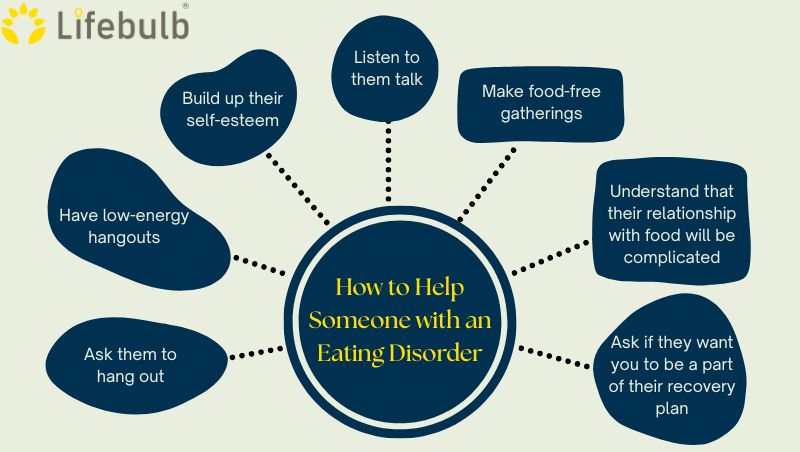
If someone tells you they have an eating disorder, it’s important to listen. If they haven’t told you but you suspect, approach them with compassion. Remember that this is probably a very sensitive subject for them.
First, determine if they need to be hospitalized. This is most common in cases of anorexia, where being overly thin can be a serious health risk. If they are passing out or getting very dizzy, taking them to the doctor is recommended. Anorexia can be fatal. Even when fully treated, damage done to organs through malnourishment may not be able to be fully recovered.
If immediate hospitalization is not necessary, try to support them with empathy and compassion without enabling their behavior. Here are some tips on how to do so:
- Keep including them: They may not feel like hanging out, but keep encouraging them to do things with you.
- Have low-energy hangouts: Watch a movie, read books, or play games with them. People with an eating disorder often don’t have as much energy, and may not be up for big hangouts. Instead, meet them where they’re at.
- Build up their self-esteem without talking about their weight: Unfortunately, people with an eating disorder aren’t likely to believe you if you tell them they’re skinny or beautiful or anything like that. Instead, compliment the other things you love about them. Tell them how much it means to you that they are in your life.
- Listen to them talk: Ask how their day was. Ask how therapy is going or how the recovery process has been. When you listen, try not to give advice or criticism. Simply listen.
- Make food-free gatherings: Eating in front of other people will be hard for a while, even during treatment. Instead of going out to dinner, go to a show or have a game night. Some light snacks are always a good idea, but full meals might be difficult for them.
- Understand that their relationship with food will be complicated: Even after they recover, they will likely have a different relationship with food than you do. It might still be a struggle some days to eat an appropriate amount of food. Because of this, things like baking them a cake or throwing a big dinner party in celebration of their recovery aren’t a good idea without talking to them about it first.
- Ask if they want you to be part of their recovery plan: Doctors may recommend that they have an accountability buddy to eat meals with. Ask if you can be one for them. If they say yes, you can step into more of an active support role. Encourage them to eat without shaming them for not eating. Sit with them until they’re done and stay a while after to help curb any purging behavior.
The best way you can support someone with an eating disorder is to simply ask how they would like to be supported. Ask if they would like you to hold them accountable to eat meals, if they want to eat meals together, or if they would prefer the subject of food not be brought up in your friendship.
If you are a caretaker to someone with an eating disorder, the roles might be a little different. Educate yourself on eating disorders and ask to be involved in the treatment plan. It can help to sit in on a few therapy sessions or have therapy sessions of your own.
Treatment for eating disorders starts with one step. Call Lifebulb Counseling to be matched with an eating disorder therapist today.
.webp)

.webp)