
-(1).webp)
Anhedonia is the inability to feel joy or pleasure from activities that used to bring you joy. It is a very common symptom of Depression, but it can also stand on its own. Feeling anhedonic can make living feel dull and bland, and it can lead to isolation and deeper mental health issues.
Fortunately, there are effective treatments for Anhedonia. If you are struggling, read this article for helpful tips.
What is Anhedonia?
The anhedonia meaning has Greek roots that literally mean without pleasure (“an-hedone”). In clinical terms, anhedonia means that someone has a reduced ability to feel enjoyment, motivation, or pleasure from things that historically felt good, like hobbies, food, or even their romantic relationship.
This mental health condition, in which you experience little to no joy or pleasure, might change how you respond to physical intimacy, a TV show, a leisurely walk, or a social invite. Suddenly, these things don’t bring joy anymore.
Anhedonia is a very common symptom of depression. However, it can also be diagnosed on its own. People with depression will experience other symptoms in addition to anhedonia, such as sadness, loneliness, hopelessness, or feelings of worthlessness, and possibly having suicidal thoughts.
There are three types of anhedonia:
Social Anhedonia: A lack of interest or derived pleasure from social interactions and relationships. You may have little interest in forming relationships with others or find the pursuit of friendship or romantic relationships pointless. And when your peers try to form and grow their relationships, you struggle to see why it’s meaningful. Social anhedonia can make you withdraw socially and become lonely.
Physical Anhedonia: A lack of pleasure from physical sensations like eating, listening to music, or being active. You might experience a loss or decrease in your libido. Food might start to taste bland, and music might be annoying or pointless (even bands you used to enjoy).
Digital Anhedonia: A subtle but blunted response to everyday, offline pleasures after long stretches of digital stimulation. After periods of seemingly endless social media scrolling, notifications, or short-form videos, your dopamine receptors seem numb. High-dopamine rewards may desensitize the brain’s reward circuitry over time, making the regular world’s slower pleasures (walks, conversations, meals) feel comparatively dull.
Anhedonia can leave your life feeling dull. People who are anhedonic feel frustrated and often wonder what’s wrong with them. In an attempt to spare yourself the hurt of not feeling joy when you think you should, you might stop doing the things that used to make you happy. And that’s when your anhedonia symptoms start to worsen, creating a bit of a snowball effect. You’re sad, lonely, and depressed, and nothing seems to sound good. Fortunately, there are ways to treat anhedonia, and we’ll get into those below.
Anhedonia Symptoms
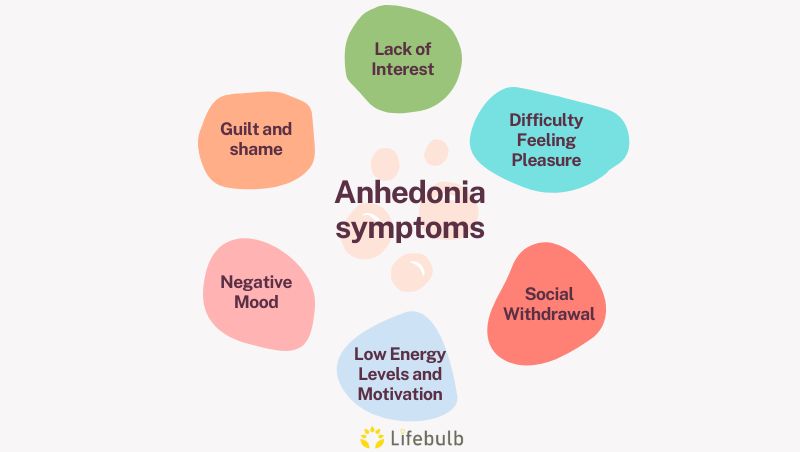
You might be experiencing Anhedonia if you notice any of the following anhedonia symptoms:
Lack of Interest: Feeling disinterested or indifferent towards activities that used to bring joy or satisfaction. You feel apathetic and emotionally numb.
Difficulty Feeling Pleasure: Struggling to experience pleasure or excitement even in typically enjoyable experiences. You have a pervasive sense of flatness or emptiness, or even just sadness.
Social Withdrawal: Isolating yourself from social interactions or distancing yourself from your romantic relationship because of an inability to derive happiness from these social connections. Feelings of loneliness turn you toward isolation, which only makes you feel more alone.
Low Energy Levels and Motivation: Experiencing persistent fatigue, lack of motivation, or reduced energy levels can further contribute to a sense of disengagement from activities or relationships.
Negative Mood: Feeling persistently sad, irritable, or emotionally detached, with emotions seeming muted or subdued compared to the intensity expected in certain situations.
Guilt and shame: All of these symptoms can cause feelings of guilt or shame. Anhedonic people often wonder what they’re doing wrong.
Anhedonia is a relatively common issue. Around 70% of people with depression experience anhedonia as a symptom, and around 18% of U.S. adults report having or being diagnosed with depression in 2025.
Can GLP-1 Medications Like Retatrutide or Tirzepatide Cause Anhedonia?
A growing number of people are taking GLP-1 medications like Semaglutide (Ozempic, Wegovy), Tirzepatide (Mounjaro, Zepbound), and newer drugs like Retatrutide. Patients taking GLP-1 medications have described emotional flatness and less interest in food, alcohol, old habits, and less joy in eating. That’s because the drug works by changing how your brain processes reward and value and by slowing gastric emptying.
A couple of studies have found insufficient evidence that GLP-1 medications cause Anhedonia specifically, and depression isn’t a class-wide effect for these drugs.
However, anecdotal evidence from some patients seems to suggest that some people who take GLP-1s do experience changes and flattening in what brings them joy.
If you are taking GLP-1 medication and notice persistent emotional blunting, you should raise this concern with your provider.
How long does anhedonia last?
Unfortunately, there’s no single timeline for Anhedonia. It can last anywhere from a few hours during a low mood to hours, days, weeks, or months when it’s linked to depression or an underlying condition. In the case of depression, anhedonia is likely to last as long as the depression does, but it gets better when you treat your depression.
The time anhedonia lasts is highly dependent on its root cause and the treatment steps taken. Causes of Anhedonia include depression, trauma, stress, difficult life transitions, or high-functioning depression.
Is anhedonia permanent?
Usually, anhedonia is not permanent. Although it can last a long time, it is a treatable condition, and with the right treatment, it can be put in remission. If you have anhedonia that is treatment-resistant, trying these up-and-coming therapeutic techniques can be helpful:
- Ketamine therapy
- Repetitive transcranial magnetic stimulation (rTMS)
- Deep brain stimulation (DBS)
- Vagus nerve stimulation (VNS):
- Lithium
Researchers are beginning to explore psilocybin as an effective treatment for treatment-resistant anhedonia and depression. Current research is promising, but the FDA has not approved it yet for mainstream use.
Does Anhedonia go away?
Yes, Anhedonia can go away, but it typically needs treatment to be resolved and rarely goes away on its own. Most anhedonic people start noticing improvements within a few weeks of starting therapy, medication, or changing medication. If depression isn’t fully treated, anhedonic symptoms may return, so it’s important to stick with your treatment plan ever after you start to feel better.
What are the treatments for Anhedonia?
Treatment for anhedonia involves coping skills, self-care, and therapy. In severe cases, antidepressants can help.
If you’re struggling with anhedonia, these things can help.
Do what used to make you happy: It may seem counterintuitive, but going through the motions of the things that used to bring you joy can spark some feelings of contentment and happiness. Start small, and keep your expectations in check: you might not feel the joy you used to, but savor the time you spend doing your hobbies, and notice any changes in how you feel. This can help to combat feelings of sadness and loneliness.
Engage with your community: Resisting the urge to draw away from everyone is important when battling anhedonia. When you can, hang out with the people that you care about, even if it doesn’t bring you as much joy as it used to. Having a community around you can help to combat loneliness and isolation.
Exercise: Exercise isn’t just important for mental health; it releases endorphins, which are natural painkillers and mood boosters. After exercise, you might find your emotions lighter and your capacity for joy stronger. Exercise is a natural way to decrease feelings of numbness or sadness. Try exercising and then engaging in a hobby or hanging out with someone to capitalize on the endorphins in your system.
Slow down: We live in a very fast-paced society where we are constantly being moved from one thing to another. Instead of rushing, learn to slow down. Savor your coffee in the morning and the feeling of the sun on your face. You can also practice gratitude to help draw attention to the good things in your life.
Practice grounding techniques: Anhedonia can create distance between you and the world around you, which can lead to dissociation and emotional numbness. To combat this, practice grounding techniques such as the 3-3-3 method, color scanning, and breathwork.
Talk to a therapist: A licensed therapist can get to the root cause of your anhedonia and help you recover from it. This may include coping skills, processing past traumas and experiences, and emotional regulation. Therapy has proven to be effective at treating Anhedonia, like depression. Read this guide to learn how to get started with therapy.
If you are struggling with Anhedonia and would like to talk to a therapist, contact Lifebulb’s team. We have affordable, online therapists near you who accept most major insurance plans and offer little to no waitlist. You deserve to experience life fully and brightly again. Therapy can help you get there.

.webp)
-(1).webp)
.webp)