-min.webp)
A lesser-known symptom of depression is a lack of motivation. The combination of hopelessness and anhedonia (the lack of pleasure from doing things that normally brought you pleasure) can result in a feeling that nothing really matters, so why even try?
This lack of motivation is a self-perpetuating cycle, however. Without motivation, you may feel more inclined to stay in bed all day, ignore friends’ calls, and stop doing your hobbies. Cutting yourself off from these healthy habits and support systems will only further aggravate depression symptoms, leading to an even greater loss of motivation.
Somehow, we have to break the cycle. We have to find motivation while we’re depressed.
Can Depression Cause Lack of Motivation?
Yes! A lack of motivation is one of the most common depression symptoms. People with depression experience fatigue, brain fog, anhedonia, and hopelessness, among other symptoms. Any one of these things can reduce motivation, but many of them together can make getting out of bed feel like an impossible chore.
One of the most frustrating parts of depression, and many mental illnesses, is that the very thing you don’t want to do is probably the best thing you could do. “Opposite Action” is a skill taught in Dialectical Behavioral Therapy (DBT), which is an effective therapy practice for depression and other mental illnesses. Opposite Action teaches that we should engage in the opposite of what our emotional urges suggest, if it aligns with our overall goals and values.
For example, if your depression is making you want to stay in bed all day, then getting out of bed is a good idea. If your depression makes you want to avoid calls from friends and self-isolate, you should push yourself to get out and socialize.
The problem with this strategy is that all those actions require motivation, and people with depression have a severe shortage of motivation. So in order to engage in opposite action and start making forward momentum through the fog of depression, we need to tap into motivation. Let’s look at some ways to do so.
7 Strategies to Get Motivated When You Are Depressed
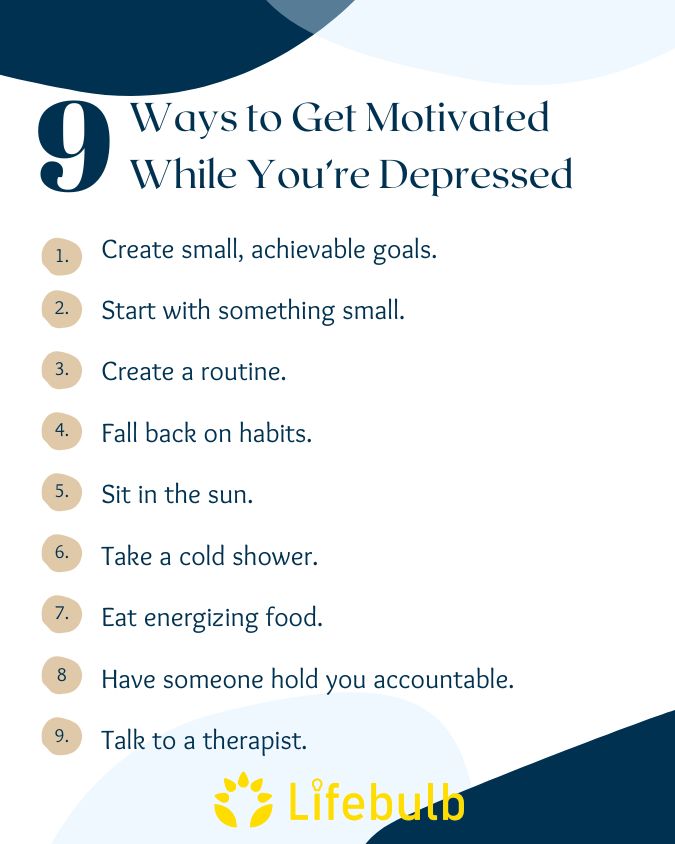
Getting motivated while you’re depressed can feel impossible, but there are some skills and tricks that make it possible. Motivation often compounds on itself; the hardest part is getting started—Once you’ve started, it’s easier to keep going.
Here are 7 strategies to capture that small bit of motivation and get yourself started:
- Create small, achievable goals: Goals like “overcome depression,” “get out of debt,” or “lose weight” are overwhelming and will take a very long time. Instead, make smaller goals like “go for a walk once a day”, “show up to work on time”, “talk to a friend every day”. These are small tasks that can be broken down into even smaller ones if necessary.
- Action Creates Motivation: Instead of waiting for motivation to come, take that first step without the motivation. This is another DBT technique. What is the smallest step you can take towards your goal? Do that with or without motivation. For example, sit up and put your feet on the ground. If you get stuck there, that’s fine, you did the first step. But most likely, that action of sitting up will carry into the action of standing and then getting on with your routine.
- Create a routine: Our brains and bodies will fall back into what they know best. Our habits and routine have a huge say in how our day will go. You can stick to a habit without much motivation. Creating new habits is harder. Try to get into a routine on days when you have motivation to spare. When you don’t, try to keep that routine. You might find it’s easier than trying something new.
- Fall back on habits: What did you do before you felt depressed? Try to do that, even for a little. Going through the motions of something that used to spark joy in you might not have the same effect now but it can give you a burst of energy.
- Sit in the sun: Sunlight has a mood-boosting and energizing effect. Wake up to a sunrise alarm, pull back the curtains, or move outside as soon as you wake up.
- Stimulate your nervous system: Take a cold shower (or splash cold water on your face) or eat a sour candy. These are things that regulate the nervous system and can help when you’re feeling anxious, but they're also grounding techniques that bring your attention back to the present moment. This can give you just enough energy to get to the next task and keep moving forward through your day.
- Eat energizing food: It can be hard to prepare good food when you’re depressed, so try reaching for high-nutrition and easy foods. Try a deconstructed sandwich (a handful of cheese, a slice of deli meat, and a slice of bread) or a spoonful of peanut butter. You don’t have to eat a traditional “meal” to get full and feel good. If you don’t have energy to cook, keep some energizing food on hand so you can still get the calories your body needs.
- Have someone hold you accountable: It can help to have someone on your side to supplement the motivation. For example, a friend calls you soon after your alarm and talks to you as you get up and get ready for your day. Or your partner goes for walks with you to get outside and eat breakfast with you to make sure you get enough fuel at the beginning of the day.
- Talk to a therapist. Many of the techniques talked about here are core teachings of DBT, a type of therapy that is effective at treating depression, especially more severe depression or comorbid depression. A therapist can help you create a plan to implement these techniques, treat your depression, and help you find the motivation to overcome depression.
Ready to treat depression once and for all? Talk to Lifebulb about finding depression treatment near you. We have depression therapists who are available to see clients in-person and virtually via online therapy. We know it can be hard to find the motivation to start therapy, and that’s why we made the process easy. Simply contact us and we’ll match you with a therapist that meets your needs. If you’d rather, you can browse our list of therapists yourself.
-(1).webp)

.webp)
-(1).webp)