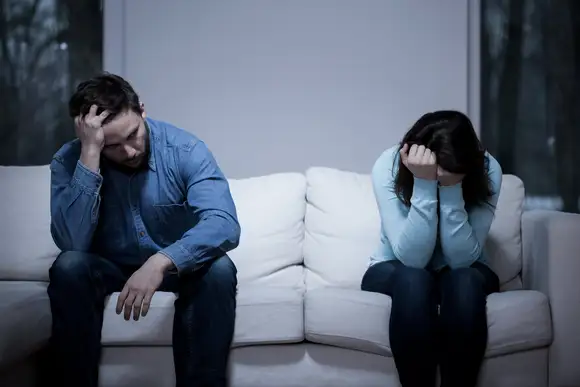
Do you find yourself scrolling through your partner’s phone when they’re not there? Or obsessing over where your partner goes after work? Maybe you’re deeply untrusting of a relationship they have with a coworker, or are convinced they’re lying to you about something big.
If you resonated with any of that, you might be struggling with relationship paranoia.
Relationship paranoia is an understandable but destructive force in relationships. When left alone, paranoia can spin out of control and end previously healthy relationships. This article will cover what relationship paranoia is, why you are so paranoid, and how to deal with paranoia in relationships.
What Is Relationship Paranoia?
Betrayal hurts. Betrayal by a life partner, someone you love and who you thought loved you, can be excruciating.
Relationship paranoia is born out of fear of this pain. Often caused by a past trauma or betrayal, when someone is paranoid in their relationship, they are afraid their partner is lying to them about something big.
Common fears of relationship paranoia include your partner:
- Cheating on you
- Lying to you about money
- Planning to break up with you
- Judging you and secretly hating you
- Making plans to undermine or hurt you behind your back
These fears persist even if there is little or no evidence. For example, a partner could plan a beautiful date, and you are still paranoid that they’re only doing so to distract you from their infidelity, when in reality, they just want to show how much they love you. This is paranoia at its finest.
Paranoia is groundless and insistent. This can make it difficult to treat and fertile ground for other mental health issues to spawn. Paranoia is a common symptom in mental health disorders such as:
- Anxiety
- Schizophrenia
- Borderline Personality Disorder
- PTSD and c-PTSD
Among others. Although being paranoid in a relationship does not automatically mean you have a deeper mental health disorder, it is a sign to talk to a therapist or psychiatrist to ensure it doesn’t spiral into something worse.
Examples of Paranoia in Relationships
Examples of paranoia in relationships include things like:
- Checking your partner’s phone, messages, or social media when they’re asleep or not around
- Tracking their location or secretly installing tracking apps
- Assuming there is always a hidden, negative meaning behind conversations, facial expressions, and texts.
- Constantly asking where they are, who they’re with, or what they’re doing
- Showing up unannounced to “catch” them or confirm what they said
- Monitoring their online activity—when they were last active, who they follow, who likes their posts
- Calling or texting repeatedly if they don’t respond right away
- Accusing them of lying or cheating without evidence
- Trying to control who they can spend time with or talk to
- Testing their loyalty by pretending to be someone else online or setting “traps”
Paranoia stretches far beyond just behavior. If you are experiencing chronic paranoia, you might also have symptoms such as:
- Believing they’re hiding something even when there’s no clear reason
- Feeling certain they’re losing interest or planning to leave
- Assuming every argument or quiet moment means they’ve found someone else
- Interpreting normal behavior (being busy, needing space) as rejection or betrayal
- Feeling unsafe or constantly on edge in the relationship
- Having intrusive thoughts about being deceived or abandoned
- Feeling depressed or anxious
- Having negative self-thoughts, about how you’re the worst partner or how no one could ever love you
Relationship paranoia often stems from something else: low self-esteem, a previous trauma, or a preexisting mental health disorder. Knowing why you are so paranoid in a relationship will help you and your partner work together to heal the paranoia for good.
Why Am I So Paranoid?
Paranoia has a cause. You’re not just a paranoid person; something happened to make you this way. Through treatment like therapy, support groups, and medication, you can heal from the past and stop being so paranoid.
Causes of paranoia in a relationship include:
- Anxiety disorders
- Low self-esteem
- Insecure attachment styles
- Depression
- Paranoid personality disorder
- Delusional Disorder
- Betrayal or infidelity in past relationships
- Emotional abuse or gaslighting in past relationships
- Childhood trauma or neglect
- Growing up in a mistrusting or paranoid household
Certain relationship dynamics can make paranoia worse. These relationship behaviors include:
- Lack of communication – Unclear boundaries, secrecy, or emotional distance can breed misunderstanding and fear.
- Inconsistent behavior – When a partner’s words and actions don’t align, it can trigger suspicion.
- Power imbalances – If one partner feels dependent or less in control, paranoia may develop as a defense mechanism.
- Frequent conflict or jealousy – Repeated arguments can erode trust and heighten fear of betrayal.
Addressing these behaviors will be critical to rooting out paranoia in your relationship.
Other factors, like a lot of social media use, a major life transition, isolation, or substance abuse, can also contribute to relationship paranoia.
Paranoia is a complicated emotion that is often the symptom of something else going on. Getting to the root of the cause is one important part of your healing journey.
How to Stop Being Paranoid About Your Relationship
Once you’ve identified that you have a problem with paranoia and have identified some potential causes of the paranoia, you can take the steps to heal the relationships.
Talking to a therapist is the best, most effective way to heal from paranoia. Other coping mechanisms include:
- Identify Triggers: Know what makes you paranoid. Communicate this to your partner and come up with a plan to manage the paranoia together.
- Find a safe word: When you start to notice that you feel paranoid, or if your partner notices that you are acting paranoid, having a “safe word” can quickly get both parties on the same page. This safe word can mean, “Hey, I’m feeling really paranoid and unsure about our relationship right now.” And in response, your partner can provide support in a way that you’ve discussed works for you.
- Communicate What Works: What helps you feel reassured when you’re feeling paranoid? What makes it worse? Make a list of each of these and provide them to your partner. Come up with a safe routine that your partner can do when you’re feeling paranoid.
- Listen to Your Partner’s Perspective: It can be hard to feel like your partner doesn’t trust you, even when you're trying to do everything right. Try to approach your partner with empathy and understand how your paranoia is affecting them and what you can do to support them as well. Coming together is the only way to beat paranoia.
- Be Vulnerable: The core fear behind paranoia is betrayal, so you might find yourself locking up and avoiding vulnerability. As scary as it is, opening yourself up and being vulnerable can actually help with paranoia.
- Distract yourself: When you’re feeling especially paranoid, try to distract yourself so you don’t give in to your paranoid behaviors. It will be uncomfortable, but taking the steps to avoid acting out on your paranoia will eventually teach your brain that it is safe.
If your paranoia continues or worsens, seek the help of a licensed therapist. Paranoia can spin out of control quickly, and a licensed therapist can help you get things under control so you can heal and learn to be vulnerable with the people you love.

.webp)
.webp)