
Marriage counseling is a form of psychological therapy for couples whose relationship is ending or on the verge of ending. This treatment of therapy depends on different marriages and different situations. Even the happiest couple can have trouble in their relationship. The main objective of marriage counseling is for the couple to identify the problems between them and find solutions to deal with those problems, sometimes these problems can test even the strongest of bonds.
The biggest problem faced by couples who go for marriage therapy is heavy conflicts between them and growing distance in their relationship. Day-to-day small problems can also become the cause of distance in your relationship. According to some experts, couples wait for years to seek outside advice, which can sometimes be disastrous for their relationship because the sooner you resolve the matter, the less problems the relationship will have.
What is marriage counseling and why might you need it?
Marriage counseling is a type of psychotherapy for married couples to try to resolve the problems in their relationship. Even if your relationship isn't facing major problems right now, marriage counseling can serve as a preventative measure. By learning effective communication and conflict resolution skills, you can strengthen your bond and navigate future challenges more easily. Here are the reasons why you may need marriage counselling:
1. Communication Issues & Lack of Understanding:
Communication breakdown is a serious problem. It can be challenging to express thoughts and emotions which can lead to misunderstandings. Marriage counseling aims to help couples with their communication skills promoting empathy and mutual understanding. If conflicts have escalated without resolution counseling offers strategies to manage disagreements constructively and find common ground.
2. Concerns About Intimacy:
Intimacy is an important aspect of any marriage. If you're facing difficulties in this area a marriage counselor can help address these factors and rebuild intimacy. This may involve exploring barriers addressing experiences that impact intimacy.
3. Healing after Infidelity:
Infidelity damages trust within a relationship and the journey toward healing can be complex. Marriage counseling provides an environment where emotions can be openly explored trust rebuilt and progress made towards healing. It involves conversations about the reasons behind the infidelity its impact on both partners and steps towards rebuilding trust while reaffirming commitment to the relationship.
4. Adjusting to Life Changes:
Transitions in life such, as becoming parents or career changes can put a strain on a relationship. Marriage counseling assists couples in adapting to these changes while preserving their bond. It centers on discovering methods to provide assistance adapting roles and obligations and preserving emotional intimacy despite the changing situations.
5. Overcoming a Sense of Stagnation:
Seeking counseling revitalizes your bond and assists in charting a new course as partners. This means recognizing interests, establishing objectives, and exploring unique approaches to cultivate passion in your relationship.
6. Financial Stress:
Marriages can be impacted by stress related to money. Counseling can help you with methods to deal with financial inequalities and establish a joint approach to managing money.
7. Addressing Past Trauma:
Past trauma casts a shadow on your current relationship. Counseling resolves past wounds or lingering issues, paving the way for emotional healing. A marriage counselor creates a safe space for discussing and processing trauma, helping both partners understand and support each other's healing journey.
8. Family Dynamics:
Navigating families is complex. Marriage counselors guide you in setting boundaries and managing these complexities. They provide techniques for effective co-parenting, handling conflicts between step-siblings, and creating a harmonious family environment.
9. Work-life Balance:
When one or both partners fails to devote time to their relationship, conflicts are likely to arise. This often prompts the need for marriage counseling to address the underlying issues.
What is the process of marriage counseling?
Marriage counseling is usually done by psychologists and therapists who are specially trained for this. Every psychologist has different methods. Some of the methods of marriage counseling are explained in more detail below:
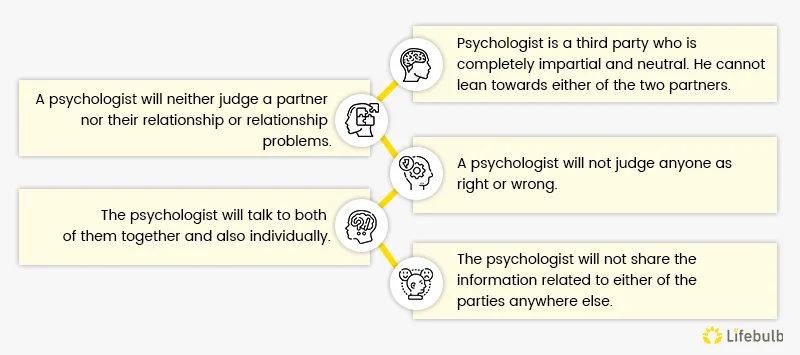
Two methods are used in marriage counseling:
1) Systematic Therapy- tries to solve people's problems by addressing their family and social background. It is possible that one partner is from a family where both their parents were very busy with their work, not paying attention to his life and the other partner is from a family where their parents were always present. This creates a gap in the nature of the the couple's experiences in supervision. In that situation, the therapist examines the hidden reasons for the differences between the two and tries to resolve them.
2) Behavioral Therapy- In this the therapist directly examines people's behavior and tries to change it and improve it. This involves identifying negative behavioral patterns and providing coping methods and alternative actions for them.
How does counseling work?
Marriage counseling is mostly done by licensed therapists who are also known as marriage and family therapists. Some things you can expect from marriage therapy are explained below:
- The therapist will ask about your history and your relationship.
- The therapist may want to talk to you and your partner separately. After the initial session is over, the therapist will give you his feedback based on his conclusions and provide treatment options.
- It is natural to have disagreements and quarrels in married life. But both need to be careful that differences do not escalate into extreme fights.
- Imposing your views on others and forcing them to do what you want is a very dangerous attitude.
- Neither of the two should strictly avoid comparing each other with anyone else. Two persons can never be compared.
- Everyone needs space to enjoy their own world very quietly, and it is the duty the couple to acknowledge and understand the need for space of the significant other.
Marriage counseling overall can help to boost the longetivity of a relationship. There are options for therapy that can be taken even before a couple is married as well. Through premarital counseling a person can decide if they want to stay with that person as a lifelong partner. Both premarital and marriage counseling boost the ability of couples to be open with their feelings and thoughts. Communication is the key to a successful marriage or relationship.
Conclusion
Marriage is that turning point in life, which completely changes your lifestyle. Marital counseling helps the married couple to understand the new lifestyle and adapt themselves. However, when the relationship becomes strained, counseling is needed. Marriage counselors help couples with present as well as future matters like family planning, financial planning, etc. For any couples experiencing problems, marriage counseling is a great option!
Lifebulb has a variety of skilled marriage counselors who cannot wait to meet you today!
-min.webp)

.webp)
.webp)