
.webp)
Gabapentin, also called Neurontin, was originally approved by the FDA for seizure medication and nerve pain (specifically from shingles). However, since then, it has risen in popularity for treating several off-label issues, including anxiety.
Using an off-label drug like Gabapentin isn’t always the best option, as it has not been approved by the FDA to treat anxiety. Still, many people find anxiety relief from using Gabapentin, and it could be a good option when traditional anti-anxiety medications don’t work.
This article will discuss dosage, side effects, and other treatments for anxiety. From reading, you can gain some insight into whether Gabapentin is right for you.
What Is Gabapentin?
Gabapentin is an anticonvulsant. When it's used to treat anxiety, Gabapentin works by mimicking a neurotransmitter known as GABA, which has a calming effect on the brain and plays a role in the body's stress response.
“GABA” being right in the name might lead you to assume gabapentin works the same way benzodiazepines do, but it doesn't. Researchers believe gabapentin instead affects calcium channels in nerve cells, which indirectly boosts GABA activity and quiets overactive neurons rather than acting on GABA receptors directly.
Is Gabapentin FDA-Approved for Anxiety?
Gabapentin is an “Off-label” drug for anxiety, meaning it has not been officially approved by the FDA to treat anxiety because of insufficient evidence. However, that does not mean there is no evidence. Many promising studies have shown that Gabapentin is effective at treating certain anxiety disorders, especially social anxiety disorder and severe panic disorder, especially in people for whom other anxiety medications do not work. Other studies have shown potential for Gabapentin treating Generalized Anxiety Disorder as well.
Gabapentin is rarely prescribed for anxiety at first. More common medications such as Benzodiazepines or Busiprone will be prescribed first, and then if they do not work, Gabapentin might be considered. This is not because Gabapentin doesn’t work; rather, there haven’t been sufficient studies to prove that it definitely does. If you have already tried other anxiety medications and they have not worked, talk to your doctor about if Gabapentin is right for you.
For a list of more common anxiety medications, read our blog on anti-anxiety medications here.
What is the Dosage of Gabapentin for Anxiety?
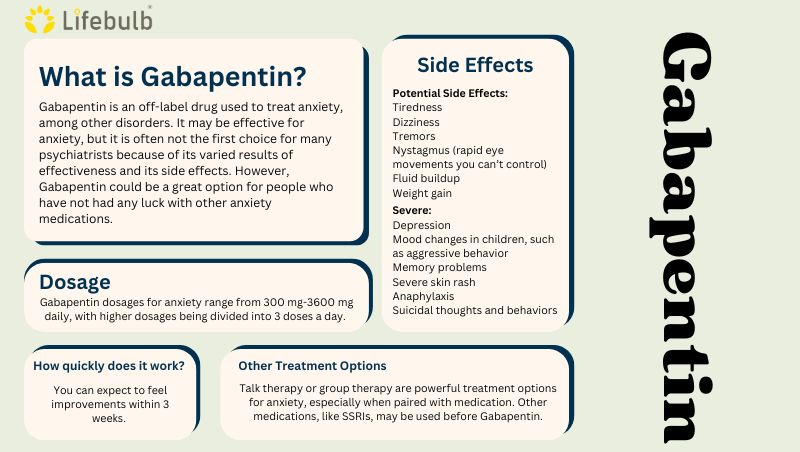
Gabapentin dosages for anxiety generally range from 300 mg to 3,600 mg per day. Lower doses, such as 300 mg once daily, are sometimes enough on their own, while higher daily totals are usually split into two or three doses rather than taken all at once. The medication comes in multiple capsule and tablet strengths, so the number of pills needed each day depends on the specific dose you're prescribed.
Doctors typically start patients on a low dose and increase it gradually, which helps the body adjust and reduces the risk of side effects like sedation. Gabapentin can often make people drowsy, so it's frequently taken in the evening or before bed, which can double as a mild sleep aid for people whose anxiety also disrupts sleep.
Because the kidneys clear gabapentin, people with reduced kidney function typically need a lower starting dose and a slower increase. Anyone with kidney disease should make sure their prescribing doctor knows this before starting the medication.
What are the Side Effects of Gabapentin?
Common side effects include:
Tiredness
Dizziness
Tremors
Nystagmus (rapid, uncontrollable eye movements)
Fluid buildup, especially in the ankles or legs
Weight gain
More serious and potentially fatal, though less common, side effects include:
Depression or a noticeably worsened mood
Mood or behavior changes in children, including aggression
Memory or concentration problems
Severe skin rash, including a rare but serious reaction called DRESS (Drug Reaction with Eosinophilia and Systemic Symptoms), which can affect the liver, kidneys, and heart
Anaphylaxis
Suicidal thoughts or behavior
Severe withdrawal symptoms, including seizures, if the medication is stopped abruptly
Slowed or dangerously shallow breathing when combined with opioids, benzodiazepines, or alcohol
Please note that Gabapentin should never be taken with alcohol or opioids.
Newer research has added a few more considerations worth discussing with a doctor. A 2025 study following more than 50,000 adults with chronic pain found that people who received six or more gabapentin prescriptions had a meaningfully higher rate of mild cognitive impairment and dementia than those who weren't prescribed the medication, with the largest increase seen in people ages 35 to 64.
This doesn’t mean gabapentin is unsafe, but you and your prescriber should discuss how long you’re planning on using gabapentin and how your dosage will be monitored over time.
Because of these risks, gabapentin should never be combined with other medications unless a doctor specifically says it's safe to do so, and it should never be mixed with alcohol or other drugs, including prescriptions like Xanax.
Never take gabapentin unless it's prescribed to you specifically, and make sure your doctor knows about every medication, supplement, and vitamin you're currently taking before you start.
Who Should Use Gabapentin for Anxiety?
Gabapentin is most often prescribed to people who've had little success with other anxiety medications or who have a specific diagnosis, like panic disorder or social anxiety disorder.
If you already take an SSRI or another antidepressant, gabapentin may not be the right addition, since it can interact with certain medications in ways that increase sedation or other side effects. Gabapentin also isn't usually recommended for people with a current or past substance use disorder, since it carries some potential for misuse, particularly at higher doses. Used as prescribed and monitored by a qualified provider, though, gabapentin can be an effective option for the right person.
How Quickly Does Gabapentin Work for Anxiety?
Like most new prescriptions, gabapentin takes some trial and error to find the right dose. When on an effective dose, most people notice improvement within 3 weeks, though some feel relief sooner and others need a bit longer. Because dosing is individualized, staying in touch with your doctor during the adjustment period is one of the best ways to speed up efficacy.
Other Treatments for Anxiety
Anxiety is complex, and it often responds best to a multi-tiered approach. Many people find the most consistent relief by combining medication with talk therapy, which helps address the root causes of anxiety and builds coping skills and healthier thought patterns over time.
Talk therapy has strong evidence behind it for anxiety, and medication remains a valuable tool, especially for more severe symptoms. Neither approach has to work alone.
If you're interested in medication, talk therapy, or both, Lifebulb's psychiatrists can evaluate whether gabapentin or another anxiety medication makes sense for you, and our therapists provide one-on-one talk therapy alongside that care. Contact our support team or browse our list of anxiety therapists and psychiatrists accepting new patients to find a provider near you.


.webp)