.webp)
Everyone experiences relationships. From our coworkers to our friends, partners, and families, we engage with people in different ways every day. Relationship dynamics are the patterns that make a specific relationship. Your dynamic with your sister is likely different than the dynamic with your friend, for example.
Relationship dynamics can be both healthy and unhealthy. This article goes over three unhealthy relationship dynamics and what you can do to fix them.
What are Relationship Dynamics?
All relationships will have a relationship dynamic, including your friendships, family relationships, and romantic partnerships. Relationship dynamics are patterns of behaviors between two people that influence how they interact, relate, and behave around each other.
Relationship dynamics are made up of coping mechanisms, values, beliefs, and unconscious emotions or traumas. Relationships are vital to our mental wellbeing, but they can be harmful too. If you’ve been hurt in relationships before, you might act out protectively. Over time, these protective behaviors form a relationship dynamic that can either help or hurt your relationship.
A healthy relationship dynamic is possible for everyone, even if you’ve been hurt in the past. A healthy relationship dynamic will encourage open communication, safe emotions, trust, compassion, and equality. An unhealthy relationship dynamic will involve fighting for power and control over the relationship, which leads to miscommunication, unintentional hurt, and mistrust.
What Are Unhealthy Relationship Dynamics?
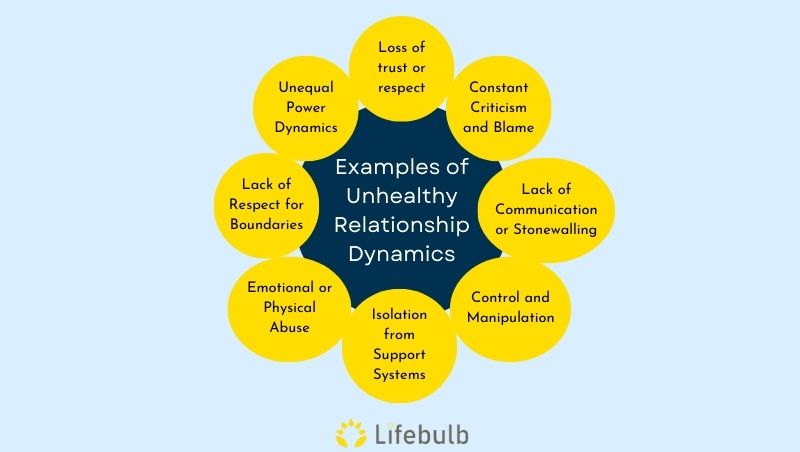
You can notice unhealthy relationship dynamics by noticing patterns of behavior in your relationship. Do the way you and your partner behave around each other often lead to arguments, conflict, and hurt feelings? Do you feel as though you are always fighting over issues that come up such as financial problems in marriage?
You may have an unhealthy dynamic that is leading to toxic behavior patterns. Examples of behavioral patterns that occur in an unhealthy relationship dynamic include:
- Constant Criticism and Blame: When one or both partners engage in a pattern of continuously criticizing or blaming each other, it can erode trust and lead to feelings of inadequacy.
- Lack of Communication or Stonewalling: Avoiding difficult conversations or shutting down communication can create a barrier to understanding and resolution, fueling resentment and disconnection. Stonewalling is a common example of this behavior.
- Control and Manipulation: This can be through controlling behaviors or manipulative tactics, such as gaslighting or guilt-tripping. One partner exerting power over the other can lead to feelings of powerlessness and diminished self-worth.
- Isolation from Support Systems: If a partner isolates the other from friends, family, or support networks, it can create dependency and make it harder to seek help or perspective from others.
- Emotional or Physical Abuse: Any form of abuse, whether emotional, verbal, psychological, or physical, is a severe red flag indicating a toxic and harmful relationship dynamic.
- Lack of Respect for Boundaries: Disregarding personal boundaries, whether physical, emotional, or psychological, can lead to feelings of violation and compromise individual autonomy and self-respect.
- Unequal Power Dynamics: When one partner consistently holds more power or control within the relationship, it can lead to feelings of imbalance, disempowerment, and resentment.
- Loss of trust or respect: If you are constantly on guard for your partner to betray you, you have an unhealthy relationship dynamic. You should be able to trust your partner when it comes to both big and small things.
You might not experience these patterns in all parts of your relationship, either. There are often certain triggers that can contribute to unhealthy relationship dynamics. You may experience more conflict when talking about:
- Financial issues in marriage
- Varying beliefs
- Parenting Styles
- Physical intimacy and how you give/receive love
- Roles and distribution of responsibilities
- Lifestyles
If you identify an unhealthy relationship dynamic, know there is hope. Like all behavior, relationship dynamics can change. Healing from past traumas and having a commitment to working together can get you started.
What Are the Three Types of Relationship Dynamics?
When it comes to unhealthy relationship dynamics, there are three common power dynamics that emerge.
These are Demand and Withdrawal, Distancer and Pursuer, and Fear and Shame. If you recognize these power dynamics in your relationship, reach out to a couples therapist near you to work through them.

Demand and Withdrawal
The demander will feel like their needs are not being met. As a result, they may ask their partner to fulfill those needs—helping out with chores or displaying more physical or emotional intimacy, for example. The withdrawer ignores these requests, either consciously or unconsciously. This relationship dynamic can contribute to conflicts in the relationship such as financial problems in the marriage due to a lack of communication and action from one partner.
Distancer and Pursuer
This is a one-sided relationship, in which one person is putting in all the work and the other is either not giving back or is actively putting distance between themselves and the pursuer. This can often be rooted in differing attachment styles.
Fear and Shame
One partner is fearful of sharing or receiving love. As a result, the other partner feels hurt or shamed, which can lead to them lashing out angrily. This relationship dynamic is often rooted in past trauma, unhealthy relationships with caregivers, and an anxious or insecure attachment style. This relationship dynamic can lead to increased conflict between the individuals.
Why Are Relationship Dynamics Important?
Understanding your relationship dynamic is the first step to building a healthier, more fulfilling relationship. It can get to the root of the conflict in your relationship, help with financial problems in the marriage, and provide tools to build healthier dynamics and patterns.
What Causes Relationship Dynamics?
Relationship dynamics are a compilation of your past experiences, values, and thought patterns. Unhealthy power dynamics in a relationship can emerge because of:
- Insecure attachment styles
- Past relationship trauma
- Tumultuous or neglectful relationship with caregivers
- Untreated mental health issues.
- Having unhealthy relationship patterns modeled to you as a child
This is not a cohesive list, as relationship dynamics are a result of a lifetime of lived experiences. Just know that it is possible to change an unhealthy relationship dynamic to a healthy one.
How Can You Change Your Relationship Dynamic?
To change your relationship dynamic from unhealthy to healthy, you first have to become aware of what type of relationship dynamic you have. Have awareness of the patterns you see and bring them up to your partner. Discuss your thoughts and feelings surrounding your behavior. Once you’ve identified the root cause, you can begin to heal.
- Treat each other with love: Unhealthy relationship dynamics are often rooted in wanting power in order to feel safe. Set aside this desire and instead reach out with love and kindness. It can be scary to put down the pursuit of power in a relationship, but doing so will help you react with love, not fear.
- Communicate your needs and wants: Be more obvious than you think you have to when talking about your needs and wants. Be clear, concise, and understanding.
- Practice empathy for your partner: Instead of lashing out when you’re frustrated, take a moment to understand their perspective. Why could they be feeling the way they are? Even if you still need to have a conversation with them about their behavior, taking time to understand their perspective will help prevent conflicts.
- Set healthy boundaries: Boundaries are vital, even the healthiest relationships have them (in fact, they likely have a lot). Make a list of your and your partner’s boundaries and how they need to be upheld.
- Learn to fight healthily: Disagreements will happen. Create some ground rules for when they do. For example, only using “I statements”, having good aftercare, or coming to a solution together.
- Work on building your intimacy and understanding: Connect deeper with each other by installing weekly dates, pursuing new activities together, or being physically intimate with each other.
- Try couples therapy: Couples therapy is a good option for those struggling with unhealthy relationship dynamics. A couples therapist can work through past trauma, current conflicts such as financial problems in the marriage, and to build a healthy base for your relationship to thrive.
Lifebulb has online, affordable couples therapists available near you. Contact our team or browse our list of couples therapists to find one that fits your needs.
You don’t have to be stuck in an unhealthy relationship dynamic. The first step towards healing starts today.
.webp)
.webp)
.webp)
-(1).webp)